

Research Perspective on Cagrilintide: A Novel Dual Amylin and Calcitonin Receptor Agonist
As a researcher in metabolic pharmacology, cagrilintide represents a compelling and mechanistically innovative therapeutic candidate currently under investigation. Here is a breakdown from a research standpoint:
1. Core Mechanism and Pharmacological Class:
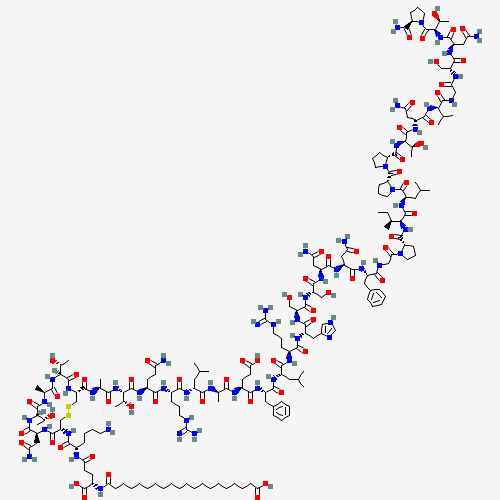
Cagrilintide is a long-acting amylin analogue, engineered to act as a dual agonist at the amylin and calcitonin receptors. This places it in a distinct category from the dominant GLP-1 receptor agonists (e.g., semaglutide, tirzepatide). Its design leverages the physiological role of endogenous amylin (or islet amyloid polypeptide), a hormone co-secreted with insulin by pancreatic beta-cells, which contributes to satiety signaling and glucoregulation.
2. Primary Research Rationale and Hypothesis:
The foundational hypothesis is that activation of amylin signaling pathways in the brain (particularly in the area postrema and nucleus tractus solitarius) potently suppresses appetite and promotes weight loss through mechanisms that are complementary but non-redundant with GLP-1. Preclinical models suggested that dual receptor engagement might offer synergistic effects on energy balance.
3. Key Research Findings to Date (from Clinical Trials):
Weight Loss Efficacy: Phase 2 data demonstrated robust, dose-dependent weight reduction. Notably, the cagrilintide 2.4 mg + semaglutide 2.4 mg combination (now under development as CagriSema) showed additive or even synergistic effects in early trials, with mean weight losses exceeding those of either monotherapy at the same doses. This is a critical research observation suggesting distinct but complementary pathways.
Mechanistic Insights: Clinical studies corroborate the expected pharmacodynamic effects: significant reduction in food intake, slowed gastric emptying, and promotion of satiety. Its pharmacokinetic profile allows for once-weekly subcutaneous administration, similar to long-acting GLP-1 RAs.
Safety and Tolerability Profile: The most common adverse events are gastrointestinal (nausea, vomiting), consistent with the mechanism of action on central and gut targets. Research is actively characterizing how its tolerability profile compares to that of GLP-1 RAs.
4. Major Research Questions and Areas of Active Investigation:
Precise Central Mechanism: While the appetite-suppressing action is clear, detailed mapping of the neuronal circuits engaged by cagrilintide versus GLP-1 RAs is ongoing. Understanding the distinct neurobiological signatures is a key basic science question.
Metabolic Benefits Beyond Weight: Research is evaluating effects on lipids, inflammatory markers, blood pressure, and, crucially, glycemic control. The CagriSema combination shows particularly promising early data for type 2 diabetes.
Long-Term Outcomes: Pivotal Phase 3 trials (e.g., REDEFINE for obesity, COMRADE for diabetes) are underway to confirm long-term efficacy, safety, and cardiovascular outcomes. The CVOT will be essential to determine if the weight loss translates into reduced MACE (Major Adverse Cardiovascular Events).
Preservation of Lean Mass: A critical question for any potent weight-loss therapy is the composition of weight lost. Early data suggests cagrilintide may favor fat mass loss, but more detailed body composition studies are needed.
Potential in Combination Therapies: The most vibrant research area is its role in rational poly-agonism. Cagrilintide is the foundational component in several investigational multi-agonist molecules (e.g., combining amylin with GLP-1/GIP activity).
5. Strategic Position in the Obesity Therapeutic Landscape:
From a research strategy perspective, cagrilintide is significant for two reasons:
Pathway Validation: It serves as a clinical proof-of-concept for targeting the amylin receptor to treat obesity, validating a new class.
Combination Pillar: Its most promising near-term application may be as part of fixed-dose combinations. The CagriSema development program directly tests the hypothesis that simultaneously targeting amylin and GLP-1 pathways yields superior efficacy to monotherapies.
Conclusion for the Research Community:
Cagrilintide is more than just another incretin mimetic; it is a pioneering molecule that has expanded the therapeutic horizon for obesity and metabolic disease. Its development underscores a shift towards targeting multiple hormonal pathways simultaneously. The ongoing research will determine whether its unique mechanism offers advantages in efficacy, tolerability, or metabolic profile that justify its use as a monotherapy or, more likely, as a cornerstone of next-generation combination therapies. Its success could catalyze further drug discovery in the amylin receptor family.
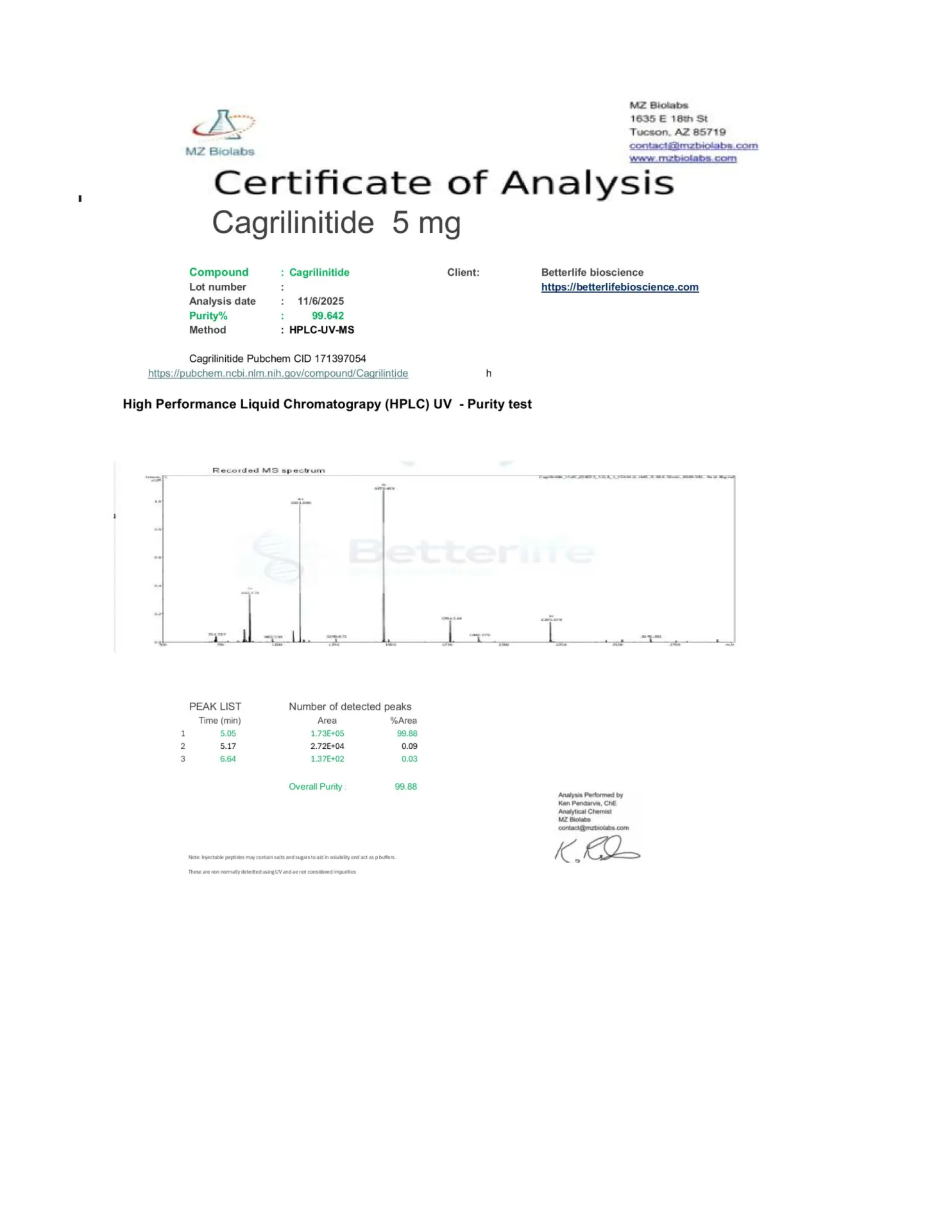
This high-purity research compound is offered exclusively for in vitro laboratory and preclinical studies by qualified research professionals. It is not for human or veterinary consumption. All work must comply with applicable research regulations and institutional guidelines.
| Weight | N/A |
|---|---|
| Dimensions | N/A |
| Size | 10mg, 5mg |



Reviews
There are no reviews yet.