
Tu carrito está vacío.
Rebajas


TB-500
Price range: $24.99 through $79.00 + impuestos
TB500 Peptide - Best Regenerative Solution
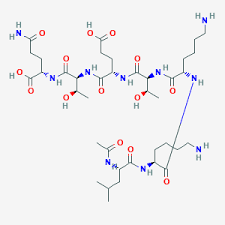
TB-500, a synthetic peptide derived from thymosin beta-4, is widely used in the context of regenerative medicine, healing, and performance enhancement.
TB-500 is not a natural substance but a synthetic version of a specific active region of the naturally occurring protein thymosin beta-4 (Tβ4) .
-
Structure: Its chemical name is N-Acetylated LKKTETQ (or Ac-LKKTETQ), which is a short chain of 7 amino acids (a peptide) .
-
Purpose: The full Tβ4 protein is large and expensive to produce synthetically. TB-500 was developed as a smaller, more manageable fragment that retains the core biological activity related to tissue repair .
⚙️ How Does It Work?
TB-500 is believed to promote healing through several key biological pathways. Research indicates it affects the body at a cellular level to encourage recovery .
-
Actin Regulation: Its primary mechanism involves binding to G-actin (a cellular protein). This regulates the cytoskeleton, which is critical for cell movement, shape, and division. By enhancing cell migration, it helps necessary repair cells reach the injury site faster .
-
Angiogenesis (New Blood Vessel Growth): It stimulates the formation of new capillaries, improving blood supply to damaged tissues. This ensures that oxygen and nutrients needed for repair are delivered efficiently .
-
Anti-inflammatory Effects: TB-500 appears to modulate the immune response by shifting macrophages from a pro-inflammatory state (M1) to an anti-inflammatory/repair state (M2). It also downregulates NF-κB, a major pathway that drives chronic inflammation .
-
Collagen Deposition: It is linked to stimulating collagen production, which is essential for rebuilding tendons, ligaments, and skin, while potentially reducing the formation of scar tissue .
📊 Current Research and Evidence
While the biological mechanisms are promising, the clinical evidence in humans is still early.
Solo para fines de investigación. No apto para el consumo humano ni animal.
Descripción
When labs buy TB-500 Research Peptide for cellular migration assays, sequence purity matters most. TB-500 is a synthetic peptide containing the primary active fragment of Thymosin Beta-4. Thus, scientists use this actin-binding sequence to study cytoskeletal regulation and tissue repair signaling in controlled lab settings.
Biological Mechanisms and Research Pathways
In addition, researchers actively test TB-500 Research Peptide across core cell pathways:
- Actin Monomer Sequestering: First, it binds G-actin to regulate actin filament dynamics and cellular structure.
- Cell Migration Motility: Second, it speeds up endothelial and fibroblast cell migration across scratch wound models.
- Neovascularization Signaling: Next, it upregulates endothelial cell differentiation to study capillary tube formation in vitro.
- Matrix Metalloproteinase Regulation: Plus, studies track how it modulates zymogen activity to direct matrix remodeling.
- Inflammatory Cascade Suppression: Lastly, researchers monitor its effect on nuclear factor-kB to assess cytokine reduction.
Comparative Delivery Research Specifications
Also, labs evaluate basic structural traits across actin-binding peptide research models:
| Research Metric | TB-500 (Thymosin Beta-4 Fragment) | Intact Thymosin Beta-4 (Full Sequence) |
|---|---|---|
| Primary Sequence Focus | Ac-LKKTETQ Core Active Binding Domain | Full-Length 43-Amino-Acid Native Peptide |
| Actin Polymerization Activity | Targeted G-Actin Sequestration & Motility | Broad Cytoskeletal & Multi-System Binding |
| Primary Study Application | Targeted Cell Migration & Vascular Assays | Systemic Cytoskeletal Homeostasis Models |
Quality Standards and Laboratory Compliance
Therefore, our team follows strict steps to ensure consistent quality across all test batches. Furthermore, every batch of TB-500 Research Peptide passes full testing to ensure over 99% purity. Please note that we sell all items for lab research only. They are not for human or animal consumption.
Información adicional
| Peso | 1 oz |
|---|---|
| Dimensiones | 9 × 6 × 2 in |
| Tamaño | 10 mg, 2 mg, 5 mg |
Productos relacionados
-
GHRP-6
$22.90 + impuestos -
Kisspeptina 10
Rango de precios: de 34,00 $ a 65,00 $ + impuestos(1 reseña) -
Rebajas
Palabras -C
Price range: $47.50 through $125.00 + impuestos -
Fragmento 176-191 de la HGH
$43.00 + impuestos(3 opiniones)
Opiniones
Aún no hay opiniones.